Doctoral Candidate: Maria Kouvari
Co-Supervisor: Prof. Dr. Tom Avermaete, Professorship for History and Theory of Urban Design, ETH Zurich
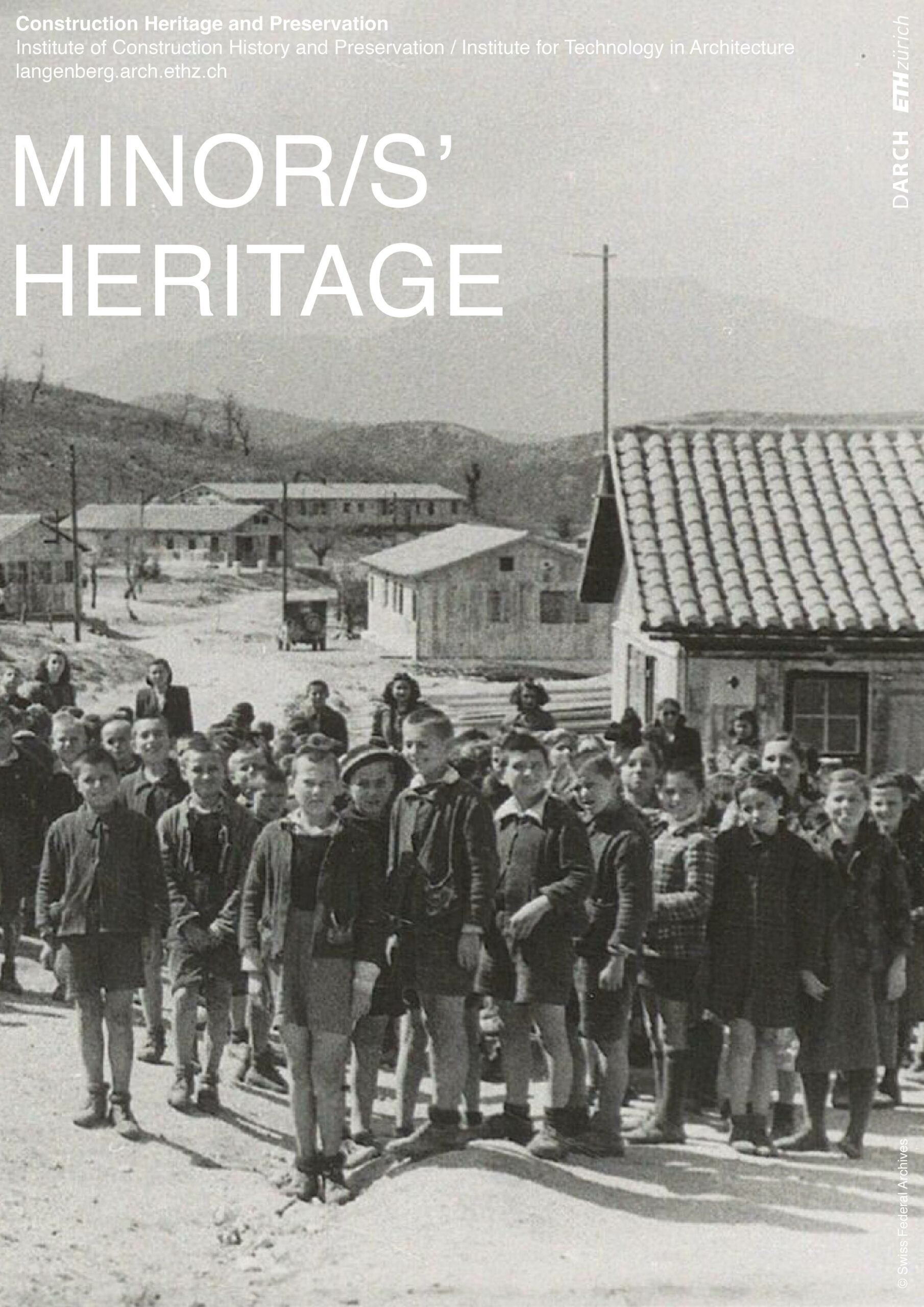
This research explores the built environment for children living without parents due to war, poverty, discrimination, disability, and loss of family circle, looking at international and national childcare projects of Switzerland in the postwar period. In the aftermath of WWII, Swiss and Swiss-based aid agencies, such as the International Committee of the Red Cross, the Swiss Relief, the Swiss Red Cross, and the Pestalozzi Children’s Foundation established international networks for child welfare and circulated concepts, design approaches, experts, and materials in war-devastated countries, including France, Germany, Austria, Italy, and Greece. The Swiss child aid mission in Greece serves as a case study for the in-depth investigation of Swiss projects beyond Switzerland and their entanglements and repercussions within their national contexts. In parallel to the international Swiss projects, hundreds of children’s institutions, such as orphanages, youth reformatories, children’s villages, and boarding schools, operated in Switzerland. Most of them were hosted in buildings erected before WWII, but also in newly built environments, including works of well-known architects, such as Hans Fischli, Hans und Annemarie Hubacher, and Jacob Frei. The aim of this research is twofold: first, to document and analyze the postwar built environment of children’s institutions in Switzerland and beyond through a transnational lens, and second, to revisit their value today in relation to their architectural significance, social history, and memory discourse. The research poses the following questions: How international and national residential childcare projects of Switzerland influenced each other in terms of child welfare policy and its architectural-spatial realization, how the projects of residential childcare were appropriated, transformed, and valued within their national contexts over time, and for whom and why the heritage of these children’s institutions is pertinent. The methodology combines research in archives of international and local organizations, architectural archives, and archival estates of actors, site visits for the inspection and survey of the built artifacts, and the discussion of oral testimonies. This project considers children in care as an underrepresented and respectively overlooked group and seeks to identify their built heritage, which remains largely understudied, adding to contemporary debates within the areas of architectural history and heritage preservation.
The research forms part of the project “A Future for Whose Past: The Heritage of Minorities, Fringe Groups, and People without a Lobby” at the Chair of Construction Heritage and Preservation, ETH Zurich, in collaboration with ICOMOS Suisse, and has been awarded grants by the Foundation for Education and European Culture, Athens, and the Sophie Afenduli Foundation, UNIL, Lausanne.